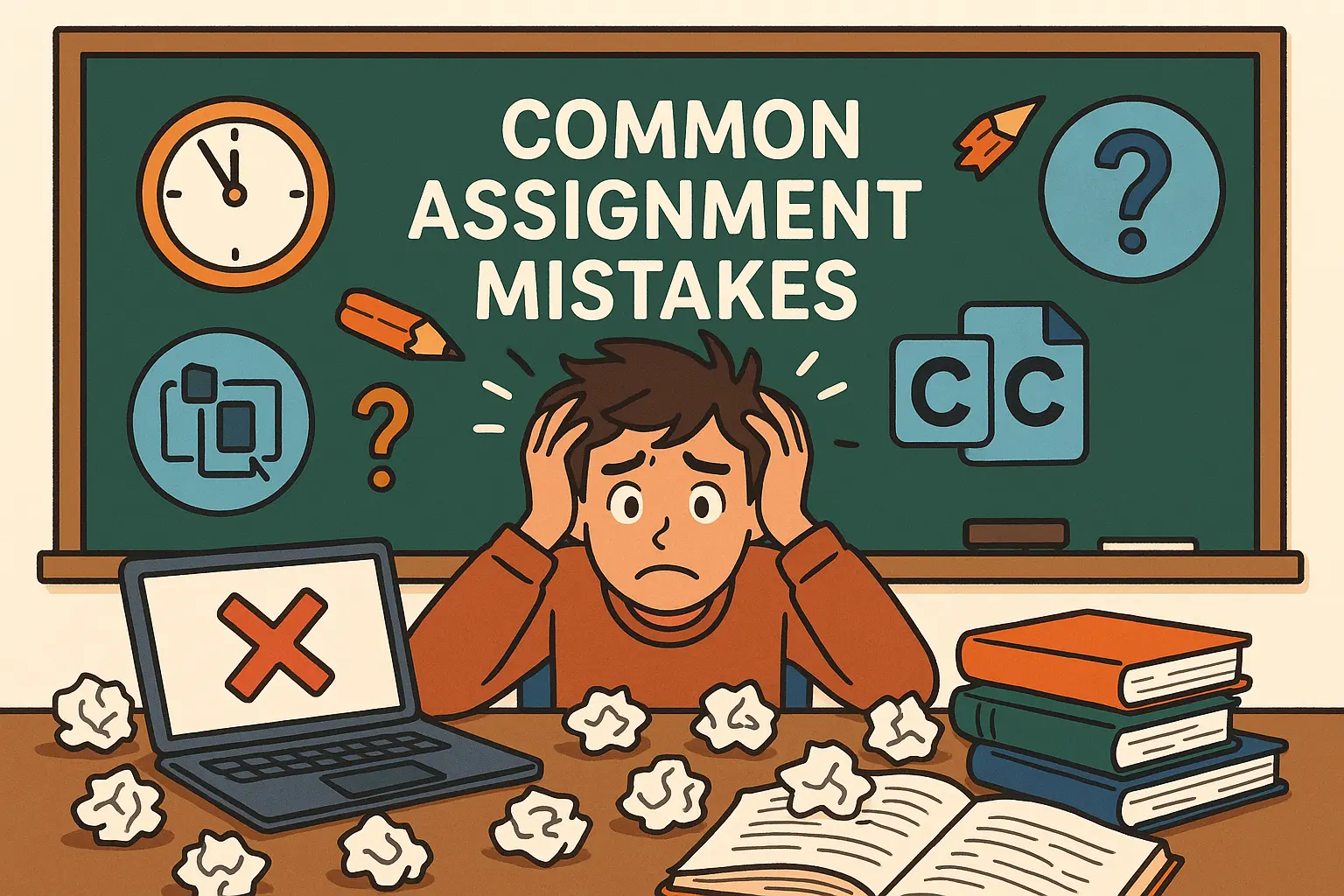
Writing assignments for students have always been a very important part of their study journey because assignments help students with a lot of things, like improving writing, problem-solving, and research skills. However, a lot of students face issues with assignments, which can affect their grades. The best is that you can get good grades by resolving all these common mistakes.
In this blog, we are going to discuss the top 20 common mistakes students make in assignments, along with tips to avoid them. This blog will help you if you are thinking that I wish someone could do my assignment or “do my assignment for me cheaply,” and you will also know how to tackle tasks more efficiently
1. Not Reading the Instructions Carefully
One of the major mistakes that a lot of students face is that they do not read the instructions carefully. Teachers always provide detailed instructions about formatting, word count, writing style, and deadline. But students usually follow all these instructions that affect their results, and they have to face bad grades. So the advice is that you should read the instructions two or more times so you don’t skip any point before starting the assignment.
2. Poor Time Management
The biggest enemy of good grades is your lazy behavior. A lot of students wait till the deadline and then, at the end, rush through their assignment. Due to this, they do not focus on the research, they do weak writing and careless mistakes, which affect their grades. The best solution for this is to create a study plan, break down your task, and provide enough time for your assignment.
3. Copying from the Internet (Plagiarism)
Some students take the information from a website, and they think there is nothing wrong with this, but plagiarism is a serious academic offense. All the top-class universities use tools that work as a plagiarism checker, and if you are caught by that tool, you will be marked negatively, and your grades and reputation may suffer. Always write the assignment by using your own words and citing sources properly Redefine what’s possible in trading and investment bit 1000 lexipro site.
4. Weak Thesis Statement or Introduction
If your assignment doesn’t support a clear thesis or does not have a clear introduction, then it seems like a book without its cover. The thesis is basically the main point that tells the reader what the assignment is. Take enough time to write the thesis or a strong introduction that clearly explains your main point, and the professor does not have to put in effort while reading the assignment
5. Lack of Proper Research
Taking material from one or two websites is not enough. Assignments require material from different books, journals, and review articles. If you do not do solid research, your assignment looks shallow. For a good assignment, you can use the library, online databases, and trusted educational sources.
6. Writing in a Casual or Informal Tone
As we all know, assignments are formal academic tasks. Using slang, emoji, and text message language makes your assignment unprofessional, and this may have a bad effect on the reader. Here is the suggestion that, for good marks, use clear, formal, and respectful academic language that may have a good impact on your teachers.
7. Ignoring Word Count Requirements
Many students ignore the word count while doing an assignment; sometimes they write too little, and sometimes too much. But if your professor asks for 1500 words and you only write 700 words, it means that you did not put in enough effort. And on the other hand, if you write 4000 words and the required word count is 1500, then this may irritate the reader and teacher, so make sure to stick to the word count so that the teacher does not detect the marks.
8. Not Proofreading and Editing
Even the perfect assignment can have a negative effect if there are grammar mistakes and spelling errors. If you are submitting the assignment without checking and proofreading, then it is a big mistake. Always proofread your work twice before submission because you can catch a lot of mistakes by reading it again and again. Online tools are available, like Grammarly, which may help you
9. Poor Formatting and Presentation
The basic structure of your assignment is a presentation. It matters a lot. Using different font sizes, irregular spacing, or ignoring referencing style can put a careless effect on your assignment. The best thing is that you have to follow the format that is instructed by your professor
10. Overuse of Quotes
Using the quotes in your assignment is good, but using too many quotes makes your assignment look like you didn’t do original work. Using quotes and but frequently, and explaining it in your own words, can make your assignment more readable
11. Weak Arguments Without Evidence
Some students write their opinions in the assignment, but they do not mention any facts or data regarding it. All the teachers want assignments that are evidence-based. So when you write an assignment, put an example in it or use a reference to a reliable source.
12. Forgetting to Cite Sources
If you are copying someone and using their ideas in your assignments, then you must give credit to them. Forgetting a reference means it’s plagiarism. If you are writing in flow and forget to mention the reference, then add a reference list at the end of your assignment.
13. Lack of Structure and Flow
Your assignment should have a clear structure starting from
- Introduction
- body
- conclusion
This should be the structure. If you jump from one idea to another, this will confuse the reader. Use paragraphs and subheadings in the assignment to organize it logically.
14. Not Answering the Question Properly
Usually, students write long assignments but do not answer the main question asked by the professor. For example, the question is about comparing two things, rather than describing them; just compare them according to the instructions
15. Using Outdated or Unreliable Sources
Google is the best source, but all the data available there is not trustworthy. Using old blogs and having information from random websites makes your assignment weak. So, to make your assignment perfect, always check the data, credibility, and authentic sources before using them.
16. Submitting Late
No matter how perfect your work is, if you do not submit it on time, you may face a huge penalty. Because time is the key to reward. And all professors value your punctuality. Always try to finish your work before the deadline.
17. Ignoring Feedback from Past Assignments
If your teacher gave you feedback on your other assignments, then do not ignore them. All students ignore them and make the same mistakes again. If you want to improve, then make sure to learn about the feedback.
18. Not Asking for Help
Some students prefer to struggle alone rather than take help. If you are confused or stuck, then contact your professor’s classmates and tutors. You can take help from academic writing services when you think, “I need someone to help me with my assignment.” Everyone thinks asking for help is a weakness, but it is a smart strategy.
19. Trying to Do Everything Perfectly
Being Perfect may lead to stress and wasted time. Many students focus on rewriting and editing, but never feel fulfilled. Remember, your goal is to do well, not to be perfect. So always focus on doing in the given time.
20. Depending Too Much on Online Services
Seeking “do my assignment for me cheap” is ok when you are stuck, but always depending on it makes you feel stuck. Put these services as a last option, so try to use them as a guide instead of copying them every time.
Tips to Avoid These Mistakes
Now that you know the top 20 mistakes, here are some practical tips to improve your assignments:
- Start early: Give yourself enough time to plan, research, write, and edit.
- Make a checklist: Note the necessities (word count, format, deadline) and tick them off as you go.
- Use academic resources: Books, journals, and library databases are more reliable than random websites.
- Write clearly: Keep sentences short and easy to understand.
- Proofread carefully: Read your assignment aloud to catch errors.
- Ask for help when needed: If you ever feel overwhelmed, don’t hesitate to say, “Please help me with this assignment.”
Why Students Search for “Do My Assignment”
Many students type keywords like “do my assignment” or “do my assignment for me cheap” because of a busy routine, part-time jobs, or difficulty understanding the subject. While there’s nothing wrong with looking for professional help, it is important to use these services wisely. Instead of copying the work, try to learn from it and improve your own skills.
Conclusion
Assignments may seem traumatic, but skipping these 20 common mistakes can make the work much easier. Always remember to follow instructions, manage your time, research properly, and present your ideas clearly. And if you ever feel it’s too difficult, then there is nothing wrong with searching, “Can someone help me with an assignment?” or even looking for “do my assignment for me cheap” services. But use these services for help, not for permanent use.
By knowing these mistakes and actively avoiding them, you will not only improve your marks but also become a more confident and independent student.