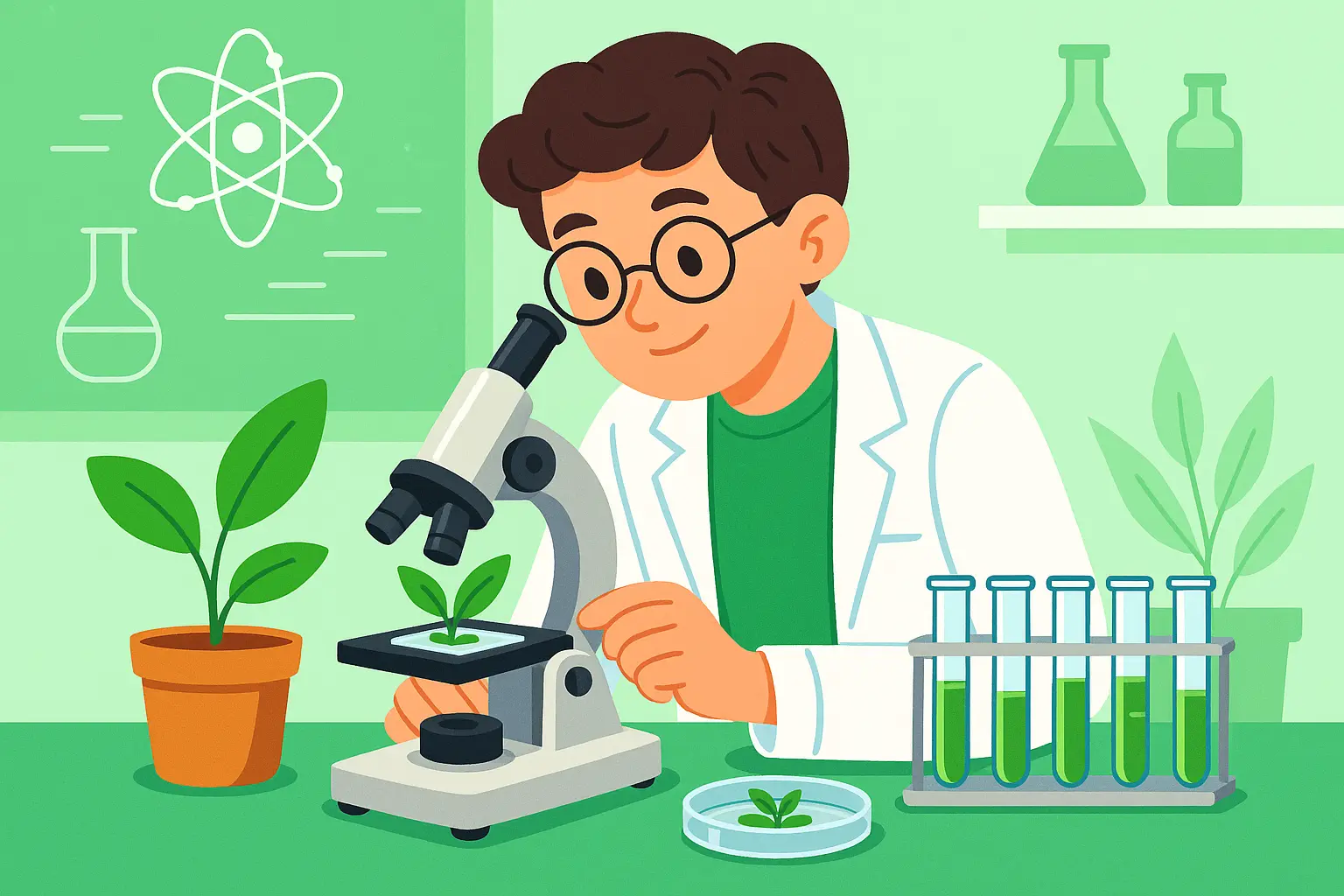
Biology is one of the most fascinating branches of science because it helps us understand life from the tiniest microbes to the most complex organisms. For high school students, the subject becomes truly exciting when theory meets practice through hands-on experiments. These activities allow learners to explore the living world, ask questions, and discover how life functions on both microscopic and macroscopic levels.
Whether you are attending a traditional classroom or have chosen to take my online biology class, performing experiments adds depth to your learning. They promote curiosity, creativity, and critical thinking all while making science fun. In this blog, we’ll explore the best biology class experiments for high school students, grouped into major themes for easier understanding and classroom application.
Cell Biology Experiments
Cell biology forms the foundation of all life sciences. These experiments introduce students to the structure, function, and behavior of cells the building blocks of life.
Observing Mitosis Under a Microscope
Objective: To observe and identify different stages of cell division (mitosis) in an onion root tip.
Overview:
Mitosis ensures that each new cell has the same number of chromosomes as the parent cell. This experiment allows students to visualize phases like prophase, metaphase, anaphase, and telophase.
Materials Needed:
- Microscope
- Prepared onion root tip slides
- Staining solution (like aceto-orcein or iodine)
- Dropper and cover slips
Procedure:
- Place the stained onion root tip on a glass slide.
- Cover it with a cover slip and gently press to flatten.
- Observe under low, then high magnification to identify stages of mitosis.
Learning Outcome:
Students will understand how cells divide, grow, and maintain genetic consistency a concept central to both plant and animal biology.
Observing Osmosis in Plant Cells
Objective: To demonstrate osmosis the movement of water through a semi-permeable membrane.
Overview:
This simple yet powerful experiment shows how cells maintain internal balance and respond to external environments.
Materials Needed:
- Potato or onion pieces
- Saltwater and freshwater solutions
- Beakers or bowls
Procedure:
- Cut equal-sized pieces of potato or onion.
- Place one in saltwater and the other in freshwater.
- After an hour, compare their firmness.
Learning Outcome:
Students see how water moves into or out of cells depending on solute concentration a fundamental process in cell biology and physiology.
Investigating Enzyme Activity Using Potato Catalase
Objective: To study enzyme action using catalase from potatoes and hydrogen peroxide.
Overview:
Enzymes act as catalysts that speed up biochemical reactions. Catalase breaks down hydrogen peroxide into water and oxygen, producing visible bubbles.
Materials Needed:
- Potato pieces
- Hydrogen peroxide solution
- Test tubes and droppers
Procedure:
- Place a small potato piece in a test tube.
- Add hydrogen peroxide.
- Observe bubbling caused by oxygen release.
Learning Outcome:
Students understand enzyme function and how environmental factors (temperature, pH) can affect enzyme activity.
Genetics and Molecular Biology Experiments
Genetics and molecular biology help explain heredity, variation, and the chemical basis of life. These experiments make abstract DNA concepts tangible and fun.
Extraction of DNA from Fruits
Objective: To extract and observe DNA from fruits like strawberries or bananas.
Overview:
DNA, the blueprint of life, can be extracted using everyday materials. This hands-on experiment helps visualize genetic material.
Materials Needed:
- Strawberries or bananas
- Dish soap
- Salt
- Rubbing alcohol (chilled)
- Plastic bag, filter, and test tube
Procedure:
- Mash the fruit in a plastic bag.
- Add salt and dish soap to break down cell membranes.
- Filter the mixture and slowly pour chilled alcohol on top.
- DNA appears as a white, stringy substance.
Learning Outcome:
Students witness real DNA, gaining insight into its physical form and biological significance — whether in a school lab or when they take my online biology class.
Understanding Genetic Inheritance with Punnett Squares
Objective: To predict genetic traits and explore dominant and recessive inheritance patterns.
Materials Needed:
- Colored beads or paper slips representing alleles
Procedure:
- Assign letters (e.g., A for dominant, a for recessive).
- Combine alleles to simulate genetic crosses.
- Record the ratios of genotypes and phenotypes.
Learning Outcome:
Students grasp Mendel’s laws of inheritance and the concept of probability in genetics, strengthening both math and biology skills.
Exploring pH Levels in Biological Substances
Objective: To study the role of pH in biological systems using natural indicators.
Materials Needed:
- Red cabbage
- Household liquids (vinegar, soap, lemon juice, etc.)
- Blender and test tubes
Procedure:
- Blend red cabbage with water to make a pH indicator.
- Add test liquids and observe color changes.
Learning Outcome:
Students learn how pH affects enzyme activity, metabolism, and the survival of organisms.
Plant Biology and Photosynthesis Experiments
Plants are the foundation of life on Earth. These experiments help students explore how plants produce food, grow, and interact with their environment.
Testing the Effect of Light on Photosynthesis
Objective: To study how light intensity affects photosynthesis in aquatic plants.
Materials Needed:
- Elodea (or any aquatic plant)
- Beaker, water, and sodium bicarbonate
- Light source and stopwatch
Procedure:
- Place Elodea in water with baking soda.
- Expose it to light and count oxygen bubbles released.
- Adjust light distance to see how photosynthesis rate changes.
Learning Outcome:
Students understand the relationship between light energy and oxygen production — a direct link to photosynthesis efficiency.
Observing Plant Transpiration
Objective: To visualize water loss from leaves through transpiration.
Materials Needed:
- Potted plant
- Transparent plastic bag and string
Procedure:
- Cover several leaves with a plastic bag and tie securely.
- After a few hours, observe water droplets inside the bag.
Learning Outcome:
Students discover how plants regulate water and maintain balance through stomata key for survival and climate adaptation.
Human Biology and Physiology Experiments
These experiments focus on how the human body functions from the senses to the circulatory system.
Investigating the Five Senses
Objective: To explore how the brain processes sensory input.
Materials Needed:
- Food samples for taste and smell tests
- Blindfolds
- Objects with different textures
Procedure:
- Conduct blind taste and smell tests.
- Have students describe textures and identify objects.
Learning Outcome:
Students understand the connection between sensory organs and brain interpretation key to neuroscience and psychology.
Modeling the Digestive System
Objective: To simulate digestion and nutrient absorption.
Materials Needed:
- Plastic bags, banana, crackers
- Vinegar, water, and stockings
Procedure:
- Mash banana and crackers in a bag with vinegar to mimic the stomach.
- Pour into stockings to represent intestines.
Learning Outcome:
Students visualize digestion and nutrient absorption a great hands-on activity in both physical and online biology classes.
Studying Blood Flow with a Heart Pump Model
Objective: To demonstrate how the heart pumps blood.
Materials Needed:
- Plastic bottles, balloons, straws
- Red-colored water
Procedure:
- Create chambers using bottles and balloons.
- Use straws to represent arteries and veins.
- Pump the balloons to simulate heartbeats.
Learning Outcome:
Students visualize the circulatory system and understand how valves prevent blood backflow.
The Role of Experiments in Learning Biology
Experiments are not just about results — they’re about discovery. Each of these biology class experiments helps students connect classroom theory to real-world biology. Through observation, hypothesis testing, and analysis, learners develop:
- Critical thinking and analytical skills
- Scientific curiosity and creativity
- Collaborative teamwork abilities
- Understanding of ethical and safety practices
Even if you take my online biology class, performing virtual or at-home experiments helps solidify learning and prepare for advanced studies.
Tips for Students Doing Biology Experiments
- Understand the theory first — Know the purpose and background before starting.
- Follow safety rules — Use gloves, goggles, and proper lab equipment.
- Keep detailed notes — Record every step, observation, and change.
- Ask questions — Unexpected results often lead to new insights.
- Repeat for accuracy — Replication builds confidence and reliability.
Frequently Asked Questions (FAQs)
-
Why are biology experiments important for high school students?
Biology experiments allow students to apply theory in real life, making learning more interactive. They also help develop problem-solving, reasoning, and analytical skills that go beyond the classroom.
-
Can I perform these experiments if I take my online biology class?
Yes! Many of these experiments can be done at home with simple materials. Online platforms often provide virtual lab simulations or step-by-step guides to make remote experiments engaging and safe.
-
Which biology class experiments are best for science fairs?
DNA extraction, enzyme activity, and photosynthesis experiments are excellent choices for science fairs because they are easy to demonstrate, visually interesting, and scientifically rich.
-
Are biology experiments safe for students to perform at home?
Most experiments listed here are safe when proper precautions are followed. Avoid handling live bacteria or harmful chemicals without supervision.
-
How can experiments improve my grades in biology?
Practical work reinforces theory, boosts memory retention, and demonstrates understanding — all of which can lead to higher grades, especially in assessments that include lab-based components
Conclusion
Biology is the study of life, and there’s no better way to understand life than to experiment with it. These biology class experiments for high school students combine curiosity with creativity, making science come alive. Whether you’re preparing for a science fair, completing a school project, or choosing to take my online biology class, these activities will deepen your understanding of the living world.
Each experiment from observing mitosis to simulating natural selection opens a window into nature’s complexity and beauty. So, roll up your sleeves, grab your lab notebook, and start exploring. Science isn’t just something you read it’s something you do.

